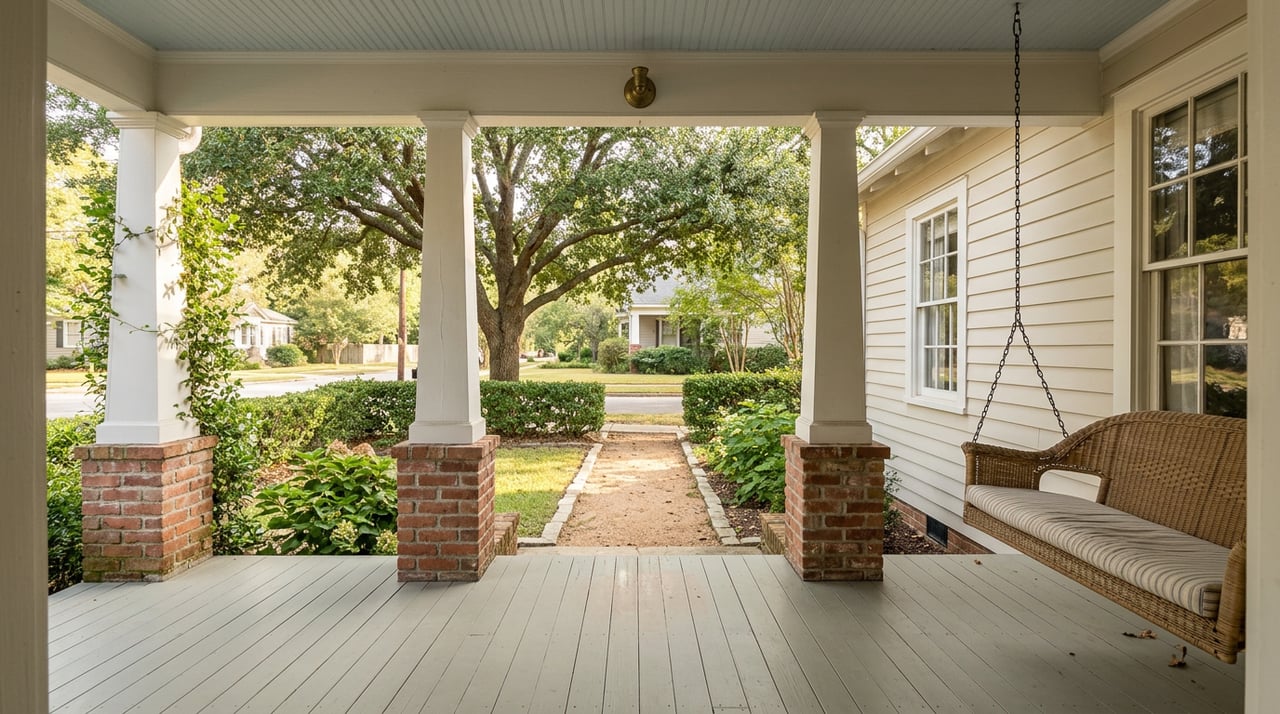
Clarksville's Summer Runs On A Park That's Still Not Finished
August 20, 2026
August 20, 2026
Walk into West Austin Neighborhood Park on a Saturday morning and you'll find the same scene that's been playing out for years: a loose cluster of dachshunds trading sniffs behind the chain-link of the fenced dog run, a few kids splashing in the circular pool behind the 1930s Tudor-style bathhouse, and, in the park's northwest corner, a stretch of empty ground still waiting on a project that was supposed to have broken ground by now.
That corner used to be a tennis court. It fell apart years ago, and the city took it out. Since then, the neighborhood nonprofit Friends of West Austin Park has been raising money to turn the spot into something called the Overlook, a quiet, adults-only gathering space with sightlines toward downtown. Austin's Parks and Recreation Department approved the design, drawn up by the well-regarded local landscape architecture firm TBG Partners, back when the group's own materials were still projecting a 2023 construction start. The most recent public update from the group pushed that to a 2025 kickoff instead. There's no evidence yet that ground has broken.
Here's the thing worth sitting with: none of that has slowed the park down. The pool still opens for its usual stretch of June through August. The dog run still fills up on weekend mornings. The bathhouse, built in the 1930s, still does its one job, housing restrooms for swimmers, without anyone waiting on a ribbon-cutting. Clarksville's summer doesn't run on what's coming. It runs on what's already there, and has been for decades.
The Overlook has been in planning since shortly after COVID, when Friends of West Austin Park first floated the idea of converting the old tennis court footprint into a small, deliberately underprogrammed space for neighbors to sit, talk, and take in a partial skyline view over the park's tree line. The design follows the master plan the city adopted back in 2013, so this isn't a rogue add-on. It's the long-delayed execution of a plan that's been on the books for over a decade.
What's notable isn't the delay itself. Plenty of small nonprofit-led park projects take years to fund. What's notable is how little anyone in the neighborhood seems to be waiting on it. The Overlook was always framed as a bonus, a nice-to-have carved out of unused ground bordering Maufrais Street, not a fix for something broken. The park worked fine without it in 2020. It works fine without it now. If it finally opens, it'll be an addition, not a rescue.
The park's real infrastructure is smaller and older than most first-time visitors expect. West Austin Neighborhood Park covers about 3.27 acres, roughly the footprint of a city block, and packs in:
A few blocks over, Mary Frances Baylor Clarksville Pocket Park does a different kind of work on just 1.43 acres. Its playground got a full rebuild in 2021, with new equipment, better drainage, and safer surfacing. It also carries a splash pad for the hottest afternoons, plus a basketball court and a dedicated outdoor pickleball court that stays open for casual play all week. The park is named for Mary Frances Freeman Baylor, the community organizer who founded the Clarksville Community Center, which is its own quiet reminder that most of what keeps this neighborhood functioning was built by people who lived here, not by developers chasing a grand reveal.
Two small parks. Under five acres combined. And between them, most of a neighborhood's outdoor summer gets handled.
The park that Clarksville actually uses every week is the same one it's used for decades. The one still fundraising is the exception, not the rule.
For longer outings, residents lean on the Ann and Roy Butler Hike-and-Bike Trail, the 10-mile loop around Lady Bird Lake that pulls in more than two million visits a year. It's an easy walk from most Clarksville streets down to the water, and it doesn't require waiting on anything either. It's just there.
If other Austin neighborhoods get written up for their openings this year, Clarksville tends to get written up for what's still standing. Clark's Oyster Bar has been shucking on Sixth and Blanco since 2012 and still runs a marble raw bar and a tree-shaded deck seven days a week. Josephine House, the little blue cottage with the wraparound patio, still does lunch, afternoon drinks, and dinner in a building that looks like it was never meant to be a restaurant in the first place. Caffé Medici's original Clarksville location, with its leather couches and multiple serving bars, is still where a lot of people in this neighborhood get their morning coffee, cortado or otherwise.
Walk the same few blocks and you'll pass Garbo's for lobster rolls, Donn's Depot for piano-bar dancing that's been an Austin institution for longer than most of the neighborhood's newer residents have lived here, Rosie's Wine Bar tucked onto Blanco, Hold Out for a beer from the same team behind Little Brother and Better Half, Howard's Bar & Club from the group behind Sammie's and Perla's, Swedish Hill for breakfast, Lin Asian Bar for dim sum, and Aris on West Sixth for a Mediterranean-leaning steakhouse menu. Almost none of it is new this year. That's the point. Clarksville's food scene isn't chasing turnover. It's proof that a five-minute walk from downtown can still feel like a small town, because most of what's on that walk hasn't changed hands in years.
The oldest building in the neighborhood isn't a museum piece behind velvet rope. The Hezikiah Haskell House on Waterston Avenue, built in the 1870s and 1880s by Peter Tucker, is a simple hall-and-parlor structure with double front doors and a low roofline, and it still opens to the public on the second and fourth Sunday of every month. It's managed today by the Clarksville Community Development Corporation, which uses it as both a small museum and a working community space with its own garden.
A few blocks away, Sweet Home Missionary Baptist Church, founded in the 1870s by the Rev. Jacob Fontaine, marked its 155th homecoming this past July. The congregation still holds services every Sunday in the building constructed in 1935, the third structure on that same site. Most of the people who filled the pews that weekend no longer live in Clarksville. They came back anyway, because the church, like the park, like the restaurant row, is still doing the job it's always done.
None of this means Clarksville is standing still. New homes go up on infill lots most months, and the neighborhood keeps changing hands the way every close-in Austin neighborhood does. But the things that define a Saturday here, the pool with the sub-four-foot depth, the dachshund meetup, the splash pad, the pickleball court, the same six or seven restaurants people have been meeting at for a decade, don't depend on the next announced project finishing on schedule.
The Overlook will probably open eventually. When it does, it'll be a nice addition to a park that was already carrying its weight. Until then, the neighborhood isn't waiting around, because it never has.
If you're already living the Clarksville rhythm and have questions about what's changing on your block, from new construction to how a specific property fits into this neighborhood's pattern of built-to-last over built-to-impress, Darsh Parikh is always glad to talk it through. Let's Connect.
Stay up to date on the latest real estate trends.
From Rooftop Patios to Sculpture Trails Around Rollingwood.
Beyond the broad appeal of a Westlake address, maximizing your home's sale depends on attracting the right buyer.
Explore the appeal of Tarrytown and what to consider before buying a home in one of Austin's best neighborhoods.
A Guide to Selling Your Multimillion-Dollar Austin Home.
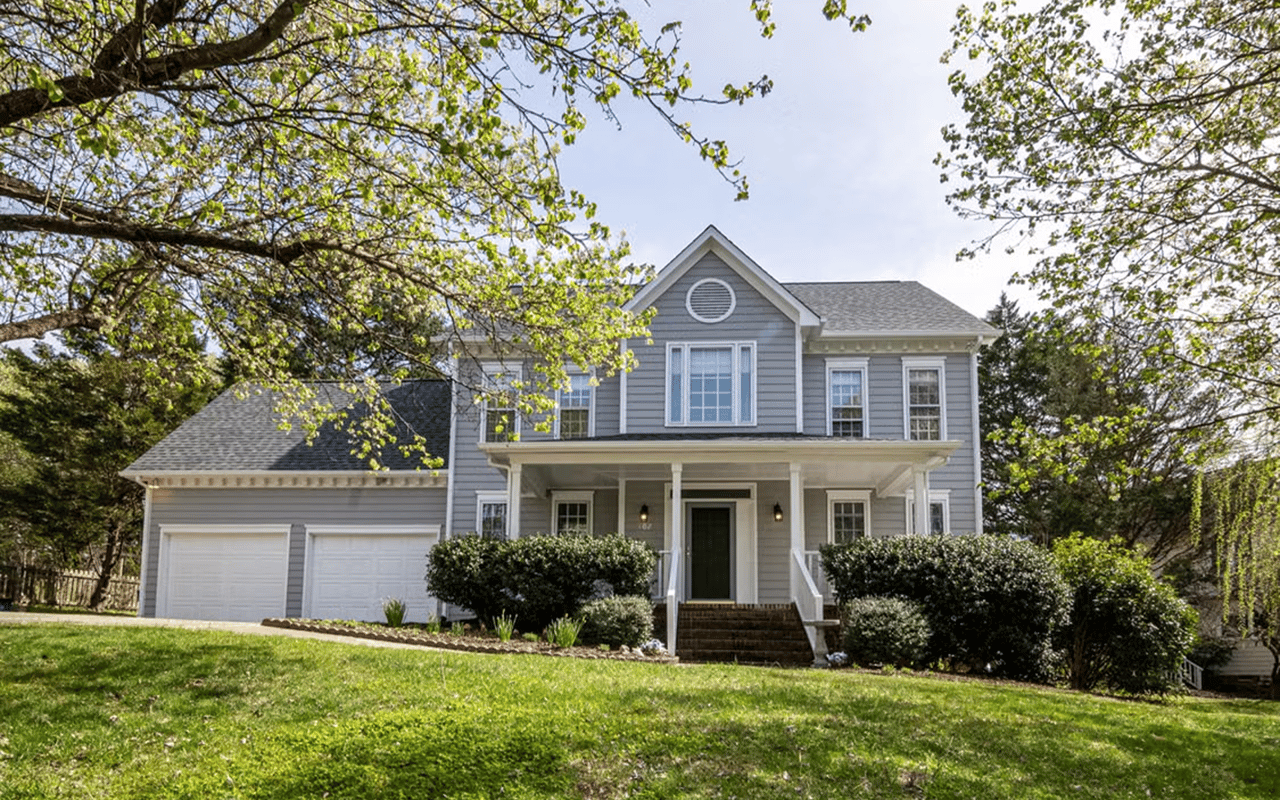
Exploring Austin's majestic Barton Hills community, among the city's most sought-after residential destinations.
Work with a top real estate expert in Austin. Buying or selling a home, they can help you. Contact them now to start your home-searching journey!