By Darsh Parikh
When you are searching for homes at the top of the Austin real estate market, the listing photos start to blur together. Wide-plank floors, floor-to-ceiling glass, waterfall countertops, and dramatic staircases show up in nearly every ultra-high-end home from Barton Hills to Westlake. What separates a genuinely well-built residence from one that simply photographs well is rarely visible at first glance. It lives in the joinery, the substrate behind the stone, the way a window is placed, and the decisions a builder made long before staging furniture arrived.
Learning to read those details puts you in a far stronger position. You stop reacting to surfaces and start assessing the structure, the material choices, and the long-term durability of what you are about to buy. In a market where a single property can carry a multimillion-dollar price tag, that level of discernment protects both your investment and your peace of mind.
Key Takeaways
- Architectural quality reveals itself in structural details and material transitions, not in staging or surface-level finishes.
- The best luxury builders in Austin invest in what you cannot easily see, including framing, insulation, and the substrate behind stone and tile.
- Genuine stone, solid-core doors, and precision millwork signal a level of investment that lower-tier finishes only imitate.
- As your agent, I will help you assess these details in context and connect you with the right inspectors and specialists in Barton Hills, Zilker, and Westlake.
Reading the Architecture Before You Reach the Finishes
Before you evaluate a single countertop, step back and look at the bones of the home. Great architecture in Austin's luxury segment tends to demonstrate intentionality: rooms are proportioned to human scale, ceiling heights relate logically to room size, and natural light is invited in through deliberate orientation rather than an oversupply of glass. A home that feels calm and balanced usually reflects a designer who thought carefully about volume, sightlines, and flow.
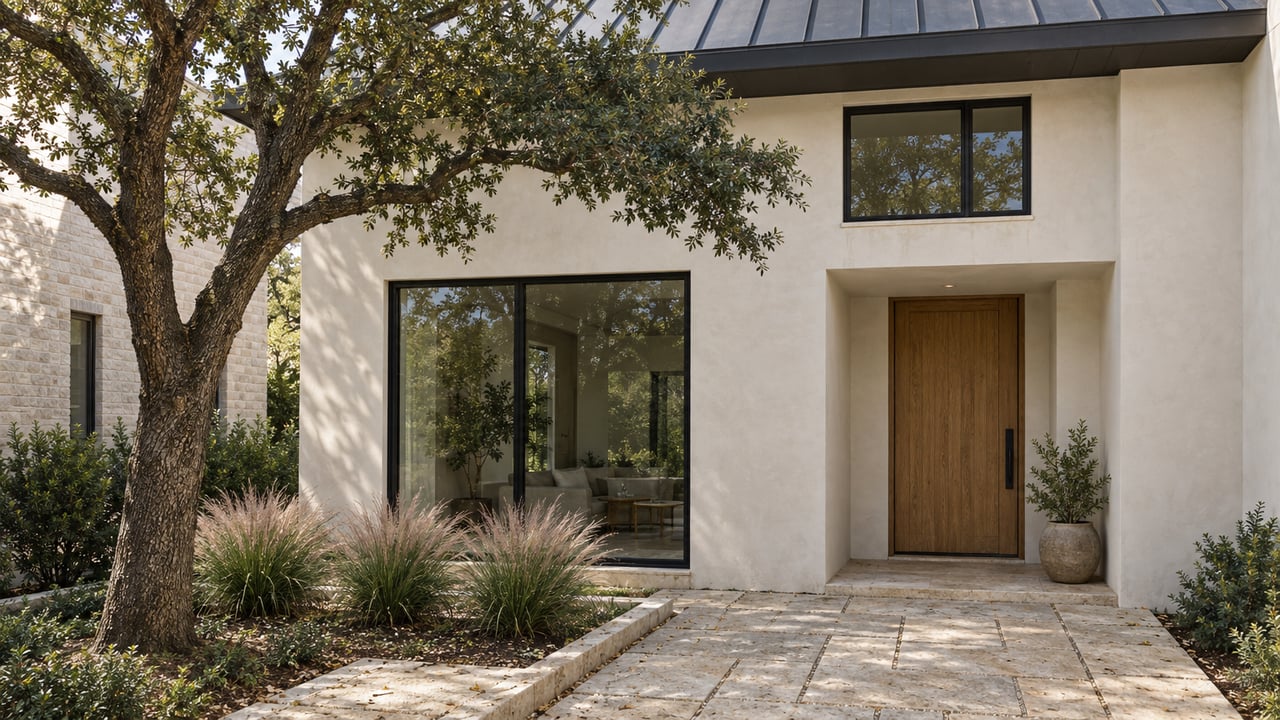
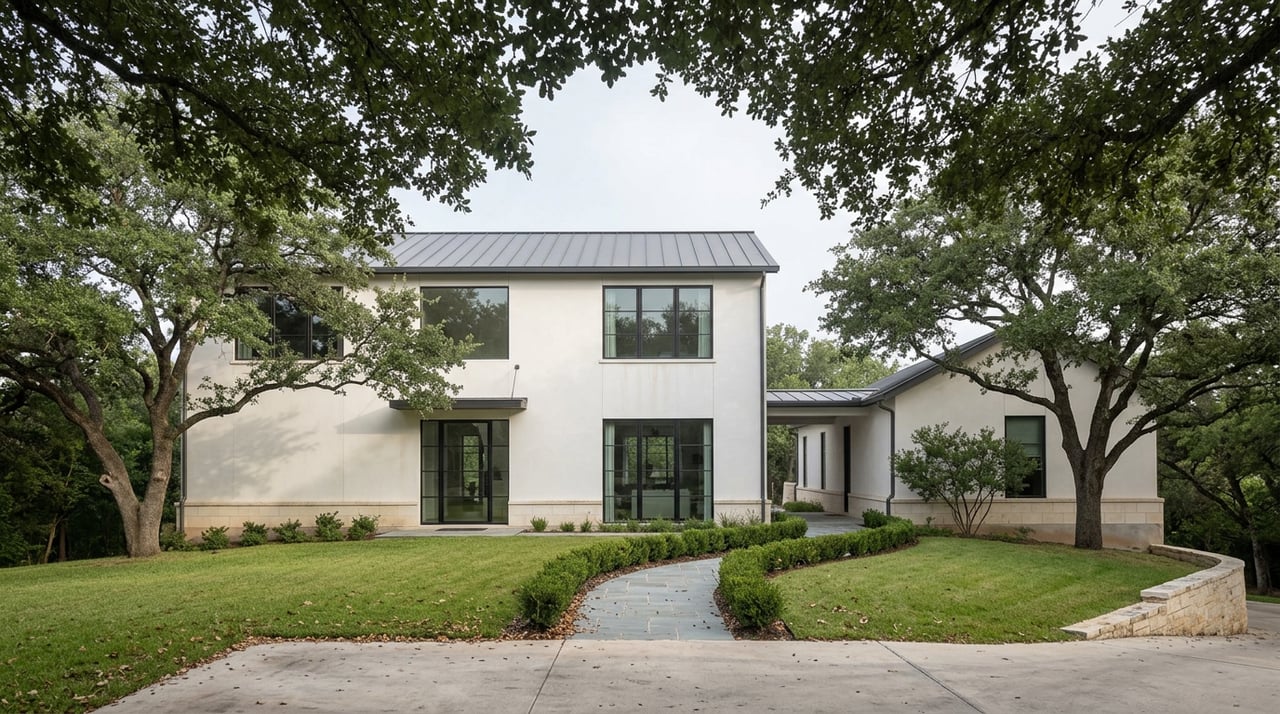
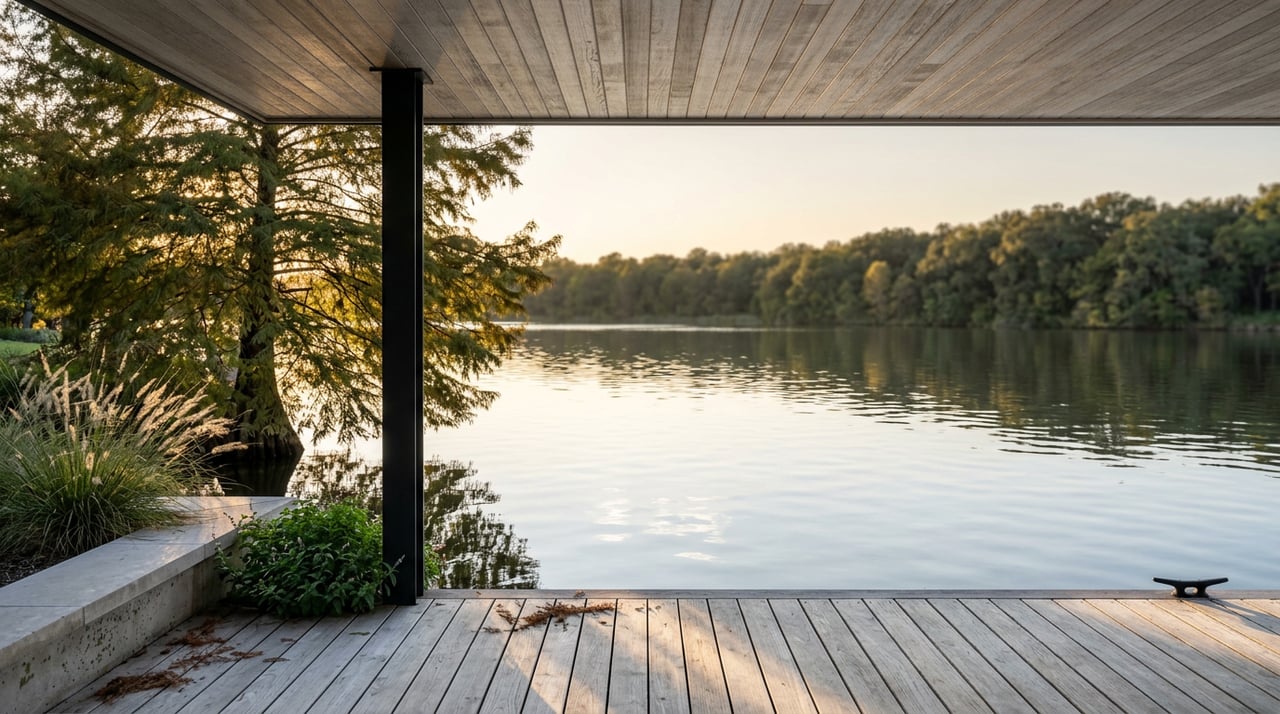
Pay attention to how different spaces connect. In the finest Westlake and Barton Hills residences, transitions between indoors and outdoors feel seamless because the architect planned covered terraces, level thresholds, and framed views from the outset. Poorly conceived homes reveal themselves through awkward hallways, rooms that feel like afterthoughts, and windows that face a neighbor's wall rather than the surrounding hill country. These are not cosmetic issues; they are structural decisions that cannot be corrected without significant expense.
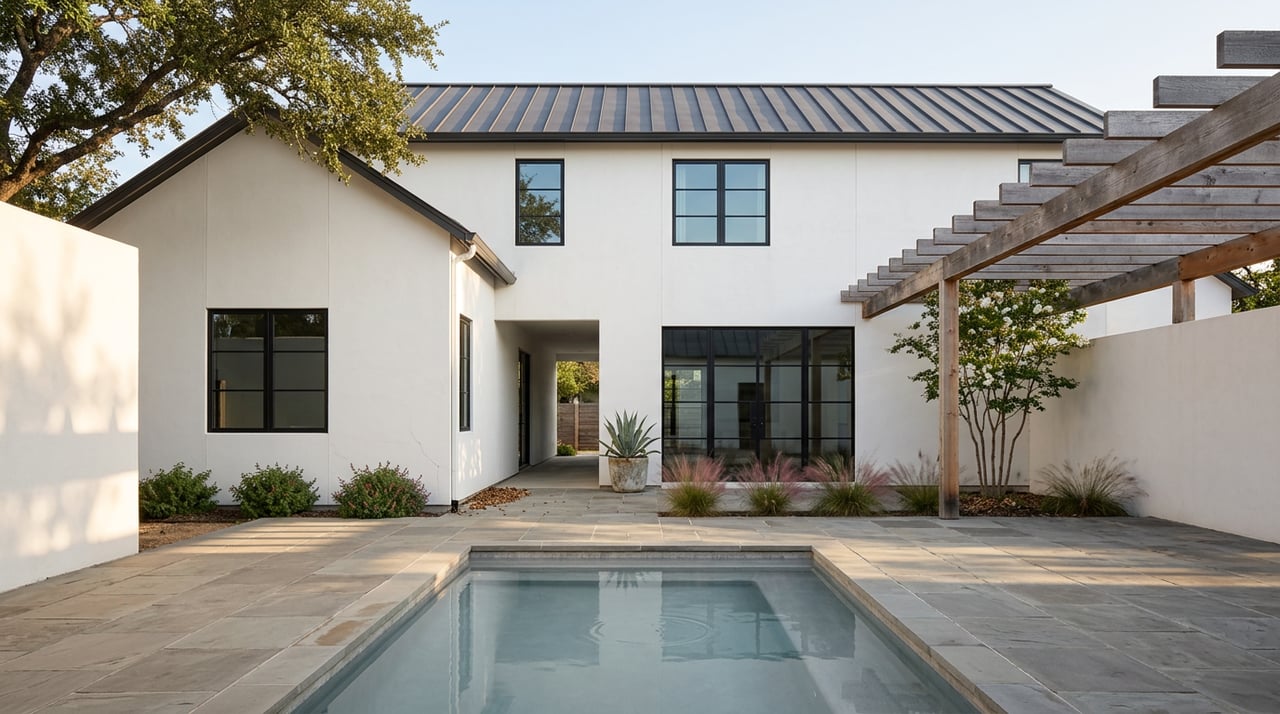
The roofline and massing also tell a story. A cohesive exterior form, with materials that wrap the home logically rather than stopping abruptly at corners, signals a builder who committed to the full vision.
What to Look For in the Architecture
- Ceiling heights that vary purposefully between rooms, so that the scale feels considered rather than uniform.
- Windows that are positioned to capture the views and light, framing the landscape instead of exposing you to the property line.
- Clean transitions between indoor and outdoor living areas, with level thresholds and covered zones for Austin's warm months.
- A roofline and exterior massing that read as one unified design rather than several disconnected additions.
- Room proportions that feel comfortable to stand in, without cavernous voids or cramped corners.
Evaluating Material Quality and Finishes
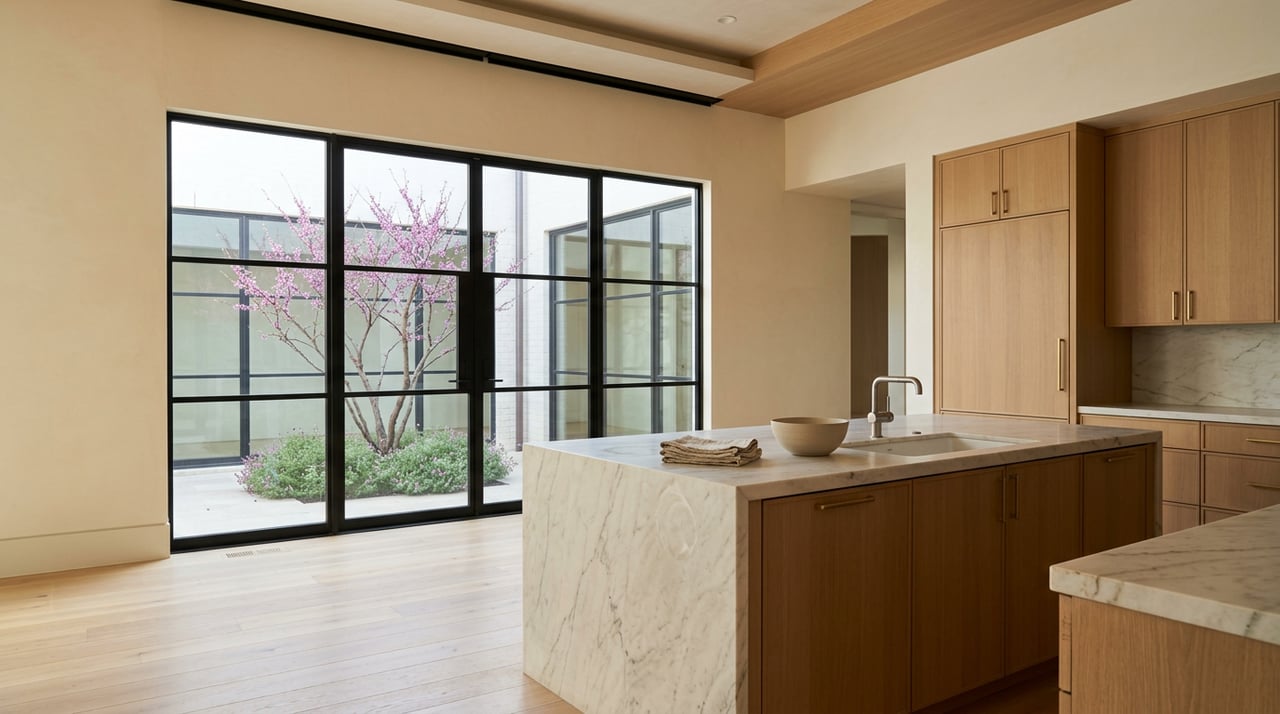
Once the architecture holds up, you can turn to the finishes, and this is where careful buyers separate substance from show. Ultra-high-end homes should use top-quality materials throughout, so run your hand along the surfaces and look closely at how they are installed. Natural stone has depth and subtle variation; engineered lookalikes tend to repeat the same pattern and feel uniform under close inspection. Hardwood flooring should feel solid underfoot, with tight seams and consistent finishing, rather than the hollow sound of a thin veneer over subfloor.
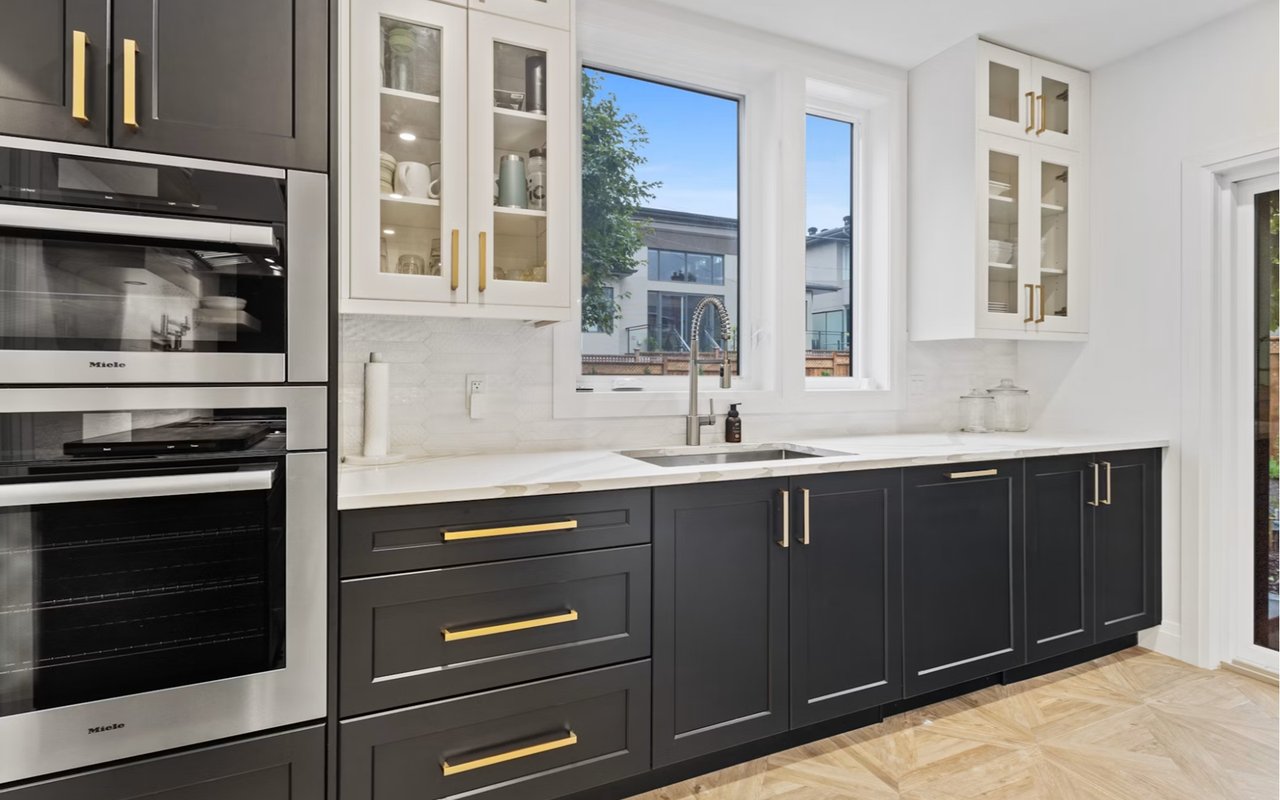
Cabinetry and millwork are among the most reliable indicators of investment. Open a drawer and check for dovetail joinery, soft-close hardware, and full-extension slides. Doors in a truly high-end home are typically solid-core, which you can confirm by the weight and the muted sound they make when closed. Trim work should meet at crisp, tight miters, and paint should be applied smoothly without visible roller texture or drips at the edges.
Fixtures deserve the same scrutiny. Premium plumbing and lighting brands carry a heft and precision that budget alternatives cannot replicate. Tile installations should have even grout lines, properly mitered edges at the corners, and no lippage, meaning that no tile sits higher than its neighbor. These details take skill and time, so their presence tells you the builder did not cut corners where it counts.
Top Considerations When Inspecting Finishes
- Confirm that stone and countertops are natural materials with genuine depth, not printed or repeating patterns.
- Test cabinetry for dovetail joints, soft-close mechanisms, and drawers that glide on full-extension slides.
- Check that interior doors feel weighty and solid-core rather than hollow and light.
- Inspect tile work for even grout lines, mitered corners, and a flat surface with no raised edges.
- Look at where materials meet, since the quality of a transition often reveals more than the material itself.
What You Cannot See: Structure, Systems, and Substrate
The most consequential elements of a luxury home are the ones hidden inside the walls, and this is where the price of a home is truly justified. Framing, insulation, waterproofing, and mechanical systems determine how the residence will perform for decades. A stunning finish applied over a poorly built structure is a liability, so it’s essential to look past the surface and understand what supports it.
Ask about the construction methods and the systems the builder chose. High-performing Austin homes often incorporate spray-foam insulation, zoned climate control sized correctly for our long summers, and moisture management designed for the local soil and rainfall. In the hill country terrain around Westlake, foundation engineering matters enormously, so understanding how the home is anchored and drained is essential. These systems are difficult to upgrade later, which is why they represent real value when they are done well from the start.
You do not have to evaluate all of this alone. A specialized inspection, paired with a review of the original plans and permits, gives you a factual picture of what lies behind the walls. As your agent, I will coordinate the right specialists and help you interpret their findings so that you can make a confident decision.
How to Assess the Systems Behind the Walls
- Request documentation on insulation type, HVAC zoning, and the mechanical systems installed throughout the home.
- Ask how the foundation was engineered for the specific soil and slope of the site.
- Review moisture management and waterproofing details, particularly around windows, decks, and lower levels.
- Order a specialized inspection that goes beyond a standard checklist for a home at this price point.
FAQs
How Can I Tell if a Countertop Is Genuine Stone or a Lookalike?
Genuine natural stone shows organic variation in veining and color, with no repeating pattern across the slab. Run your hand across the surface and look at it under direct light; natural stone has subtle depth, while engineered imitations often appear uniform.
What Finishes Signal a Truly High-End Home in Austin?
Look for solid-core interior doors, dovetailed cabinetry with soft-close hardware, precision millwork with tight miters, natural stone, and premium plumbing and lighting fixtures. The quality of the transitions, meaning how one material meets another, often tells you more than any single finish on its own.
Why Does the Foundation Matter So Much in Westlake and the Surrounding Hills?
The terrain around Westlake involves varied soil conditions and slopes, which place specific demands on foundation engineering and drainage. Understanding how a home is anchored and how water is managed on the site protects you from expensive structural issues down the road.
Buy With Clarity, Not Just Confidence
Evaluating an ultra-high-end home is a skill, and it is one you can develop with the right guidance. When you learn to read the architecture, scrutinize the finishes, and ask the right questions about what lies behind the walls, you move through the Austin luxury real estate market with real command and precision. You stop being swayed by staging and start recognizing true quality wherever it appears.
That clarity is exactly what I aim to give every buyer I work with. My focus on luxury living across Barton Hills, Zilker, and Westlake means I know these homes and the details that make one property a lasting investment. Together, we will look past the surface and evaluate each home on its true merits.
If you are ready to explore the finest homes Austin has to offer, reach out to me,
Darsh Parikh, and I will help you find and evaluate a residence built to the standard you need.