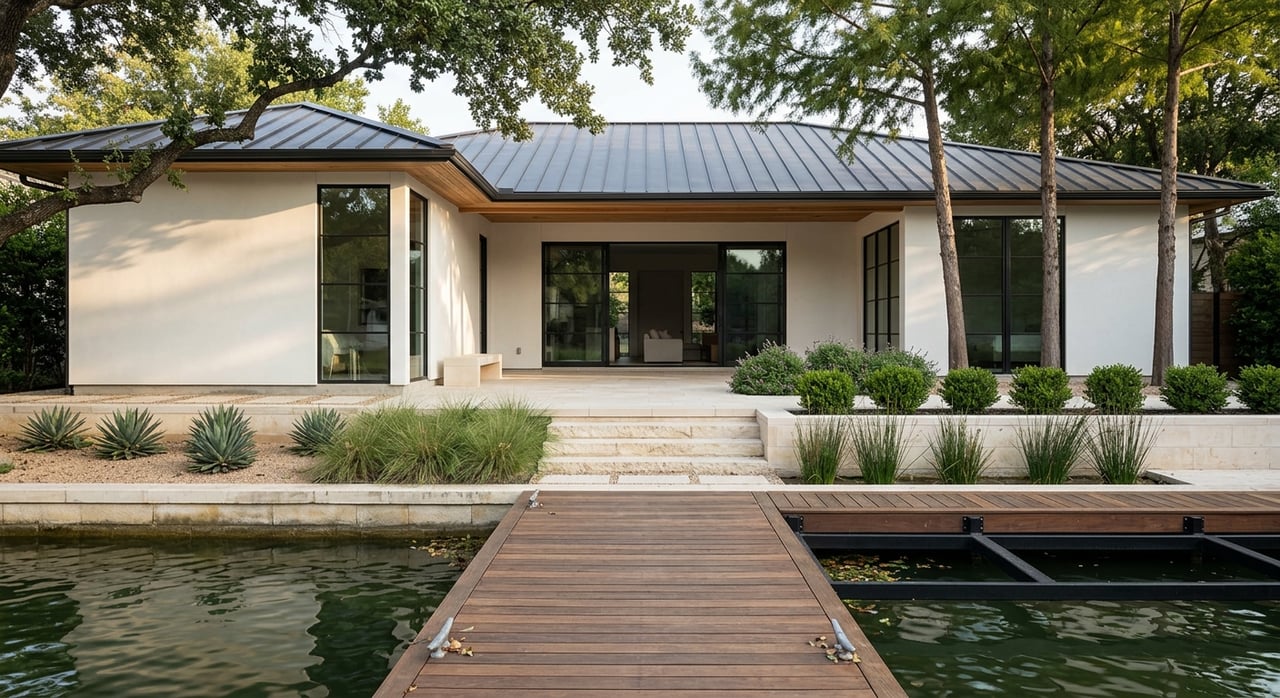
What To Know Before Buying A Waterfront Home On Lake Austin
July 16, 2026
July 16, 2026
Thinking about buying a waterfront home on Lake Austin? It can be an incredible lifestyle move, but it is also one of the most nuanced property types in the Austin market. What you are really buying is not just a view of the water, but a mix of shoreline rights, dock usability, maintenance responsibility, and day-to-day lake access. If you want to make a smart purchase and avoid expensive surprises, it helps to know what matters before you write an offer. Let’s dive in.
Lake Austin is a relatively small, narrow pass-through reservoir between Lake Travis and Lady Bird Lake. It is maintained at a constant water level and serves as a major source of drinking water. According to the Texas Water Development Board, it has about 1,589 acres of surface area and 24,644 acre-feet of conservation storage at an elevation of 492.8 feet.
That stable water level is a big part of the appeal for waterfront buyers. Unlike lakes where dramatic seasonal changes can affect usability, Lake Austin buyers are often more focused on access, permits, shoreline condition, and privacy. In simple terms, the questions usually shift from “Will there be water?” to “How usable and compliant is this property on the water?”
Current listing examples also show that Lake Austin waterfront comes in several forms. You may see true waterfront estates, canal-front homes, gated condo-regime options, and higher-end residences where the main draw is dock access, views, and location near central Austin. That variety means your buying strategy should match how you actually plan to live at the property.
One of the most important things to understand is that almost all shoreline around Lake Austin is privately owned. Public access exists, but it is limited to a relatively small number of ramps and shoreline access points. That makes private access more meaningful here than it might be on a different inland lake.
For you as a buyer, that means the property’s relationship to the shoreline deserves close review. A beautiful home with limited or awkward access to the water may not deliver the experience you expect. A smaller property with efficient dock access and better shoreline usability can sometimes be a stronger lifestyle fit.
As you compare homes, pay close attention to:
These details can shape both daily enjoyment and long-term value.
On Lake Austin, a dock is not just an amenity. It is a central part of the property’s function and often one of the most important due diligence items in the transaction.
The City of Austin requires permits for many shoreline access structures. City guidance also notes that features such as boardwalks, stairs, lifts, trams, incline elevators, and escalators may need to be screened from view. For certain single-family lots, the city says a permit may not be approved for more than two motorboats, a dock footprint greater than 1,200 square feet, or a dock that exceeds 20% of the lot’s shoreline frontage.
The city also states that boat ramp construction within city limits is prohibited. In addition, placing fill in the lake is generally prohibited except in cases tied to recapturing an eroding shoreline. So if a property appears to have extensive shoreline work or unusual water access features, it is worth confirming exactly what was approved.
Boat dock registration is another separate item to verify. The city says Lake Austin docks must be properly addressed, and residential registrations renew every five years to improve dock visibility for public safety.
Before you move forward, confirm:
Waterfront living is appealing, but it also comes with added review around floodplain rules. The City of Austin says development in the 25-year and 100-year floodplains can create flood-risk and mapping issues. It also states that a site plan is required for all development proposed within the 100-year floodplain, and some projects may need FEMA map revisions or other approval steps.
This matters even if you are not planning a major addition right away. If you want to remodel, expand, rework the shoreline, or upgrade outdoor spaces later, the floodplain status of the lot can affect what is practical, how long approvals may take, and how much effort the project may require.
A smart buyer should review:
This is one of those areas where early clarity can save you time and money later.
Not every stretch of Lake Austin offers the same day-to-day experience. The lake’s vegetation patterns, access points, and boating activity can change the feel of a property more than many buyers expect.
Austin Watershed’s 2026 vegetation updates show that the upper five miles from Mansfield Dam to Lake Austin Spa currently have hydrilla bank-to-bank. The middle section from Commons Ford Park to Emma Long Metropolitan Park has little hydrilla. The lower portion between Ski Shores Café and Tom Miller Dam has thick hydrilla along the shoreline and roughly 100 feet out from shore, including dense patches in coves, canals, and sloughs.
The city also notes that Lake Austin does not allow herbicides because it is tied to drinking-water use. Instead, management relies on sterile grass carp and localized mechanical removal. For you, that means vegetation is not just a temporary visual detail. It can affect boating convenience, swimming access, and how the shoreline feels throughout the year.
This is why it helps to think beyond the house itself. Ask how the specific stretch of the lake functions, not just how it photographs.
If your goal is to spend real time on the water, local boating rules should be part of your buying decision. Austin Police says Lake Austin has no curfew, which can be a plus for owners who enjoy flexible lake access.
At the same time, the city enforces no-wake zones and a right-side boating rule. Austin also enforces holiday personal-watercraft bans on Lake Austin during Memorial Day, Labor Day, and from July 3 through July 5.
Public ramps and access points are concentrated at places such as Walsh Boat Landing, Loop 360, Emma Long Park, Commons Ford Park, Mary Quinlan Park, and Fritz Hughes Park. Those access points, combined with a mostly private shoreline, help shape traffic patterns and activity levels along the lake.
If you are choosing between properties, it is worth asking:
Lake Austin waterfront can support very different ownership goals. Some buyers want a full-time home centered on entertaining, boating, and outdoor living. Others want a lock-and-leave property with predictable upkeep and fewer moving parts.
That distinction matters because waterfront ownership often includes more hands-on considerations than a typical luxury home. Exterior maintenance, dock logistics, shoreline upkeep, and compliance questions can all become part of ownership. If you travel often or want a simpler second-home experience, you may prefer a property where those responsibilities are more manageable.
If you plan to live there full time, the value can be easier to justify when lake use is part of your actual lifestyle. Buyers who regularly boat, host guests, and enjoy waterfront living tend to get more practical value from the added complexity. Buyers who mainly want a premium view may find that a different property type better fits their routine.
Lake Austin waterfront is not a single price category. Current market examples in public listing sources span from roughly $1.15 million to more than $12 million. A brokerage inventory page cited in the research report shows 112 homes for sale with a median list price of $1,550,000 and 206 days on market.
That wide range reflects meaningful differences in product type and value drivers. Some properties command a premium for true waterfront positioning, while others are priced around canal access, dock setup, privacy, view orientation, or convenience to the city core. Two homes may both be described as waterfront, but the ownership experience can be very different.
This is where a strategic buying lens matters. You want to understand not only the asking price, but also what is creating that value and whether it matches your priorities.
Before you buy a waterfront home on Lake Austin, make sure you review the property through both a lifestyle and compliance lens.
Here is a practical checklist:
The best Lake Austin purchase is usually the one that performs well on paper and in real life.
If you are weighing a Lake Austin property, the right guidance can help you look past surface appeal and focus on the details that really affect use, value, and long-term enjoyment. For tailored advice on luxury waterfront homes and strategic buying in Austin, connect with Darsh Parikh.
Stay up to date on the latest real estate trends.

How to Position, Price, and Present Austin Luxury Real Estate for a Standout Sale.

Designing a Luxury Home Office That Fits Austin Real Estate.

From Rooftop Patios to Sculpture Trails Around Rollingwood.
Beyond the broad appeal of a Westlake address, maximizing your home's sale depends on attracting the right buyer.
Explore the appeal of Tarrytown and what to consider before buying a home in one of Austin's best neighborhoods.
A Guide to Selling Your Multimillion-Dollar Austin Home.
Work with a top real estate expert in Austin. Buying or selling a home, they can help you. Contact them now to start your home-searching journey!