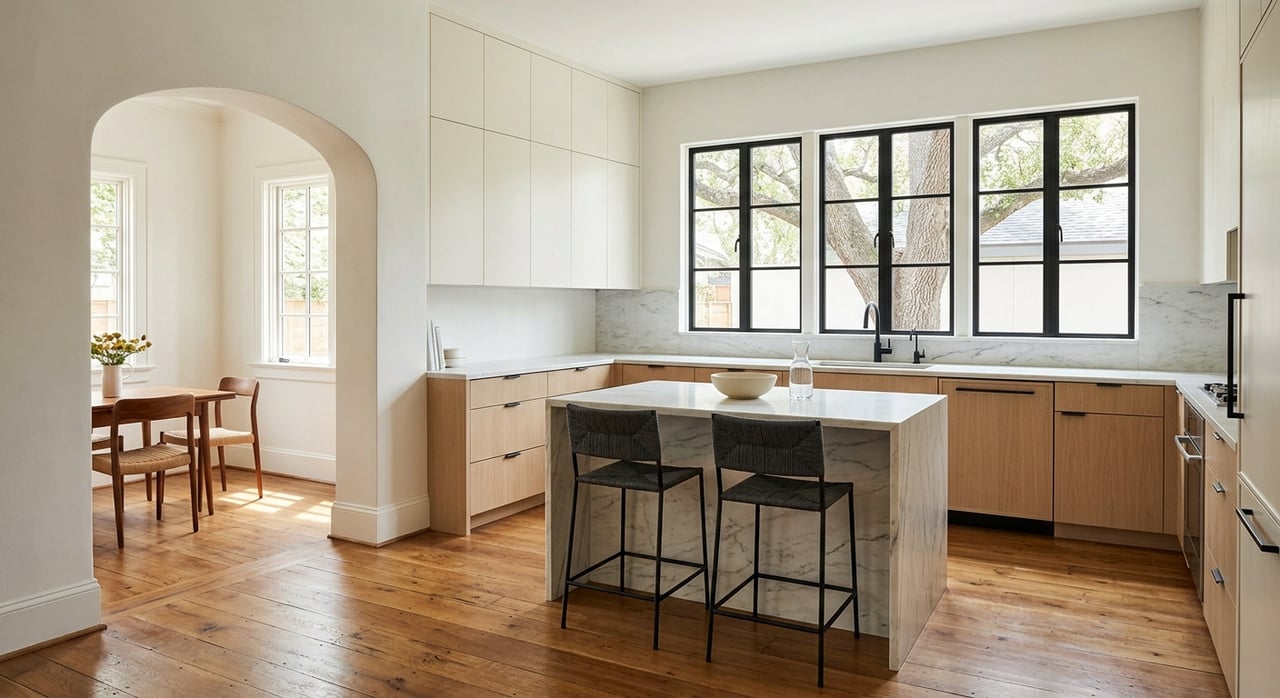
Preparing An Older Old West Austin Home For Today’s Buyers
May 28, 2026
May 28, 2026
If you own an older home in Old West Austin, you are not just preparing a property for sale. You are presenting a piece of a historic Austin streetscape to buyers who want character but still expect comfort, function, and fewer surprises. The good news is that older homes here can compete well when they feel cared for, updated in the right places, and thoughtfully marketed. Let’s dive in.
Old West Austin sits within the Old West Austin National Register Historic District, accepted in 2003, which covers roughly 1,600 homes and about 2,500 buildings across Bryker Woods, Pemberton Heights, and Old Enfield. The district is known for single-family homes, related outbuildings, park-like landscaping, minimal historic fencing, and garage access that typically faces main streets rather than alleys.
That context matters when you sell. Buyers are not only evaluating your floor plan and finishes. They are also reacting to the home’s contribution to a recognizable historic setting and the overall feel of the block.
Market conditions also support a careful prep strategy. Redfin reported that the typical Austin home bought in 2024 was only 8 years old, yet Austin was one of only four metros in that study where homes over 30 years old sold for more than homes built in the past five years. In March 2026, Redfin reported Austin’s median sale price at $530,000, with homes taking about 58 days on market and selling for about 97% of list price on average.
In an older home, the most important work is often the least glamorous. Buyers may love original floors, porch details, and mature trees, but they still worry about expensive repairs after closing.
Before you spend heavily on cosmetic changes, focus on major systems such as:
These improvements can reduce the sense of risk that often follows older properties. They also help your home feel more comfortable and more move-in ready during showings.
The U.S. Department of Energy notes that many older homes have less insulation than newer ones. It also states that air sealing and insulation can improve comfort, lower heating and cooling costs, and support durability.
For many Old West Austin sellers, energy improvements are not just a bonus. They may also relate to city requirements.
Austin Energy says the ECAD ordinance applies to homes within Austin Energy’s service area and Austin city limits that are 10 years old or older, and it requires sellers to disclose home energy-efficiency details. Austin Energy also states that its Home Energy Savings program can provide a participation document that exempts a seller from ECAD reporting requirements, with listed measures that include air infiltration and duct sealing, attic insulation, duct replacement or insulation, HVAC tune-ups, and smart thermostats.
That means pre-listing efficiency work can serve two purposes at once. It can improve how the home lives today, and it can support cleaner marketing and disclosure prep before you go active.
Today’s buyers often want older homes to feel updated, but not stripped of personality. In Old West Austin, the best results usually come from selective improvements rather than full overhauls that make the home feel disconnected from its age.
A practical refresh may include:
This approach matches what many buyers respond to in character homes. They want signs of care and convenience, but they also want the warmth, texture, and architectural details that made them consider an older home in the first place.
National Association of Realtors 2025 staging research found that the living room, primary bedroom, and kitchen are the most important rooms to stage for buyers. That same research also showed that photos, physical staging, videos, and virtual tours all matter to buyers’ agents.
NAR’s 2025 buyer and seller profile noted that buyers increasingly choose new construction to avoid renovations or major repair issues. Existing homes still attract buyers because of value, lower price, and charm.
For an older Old West Austin home, that creates a clear challenge and a clear opportunity. Your goal is to preserve the charm while reducing the renovation burden buyers imagine when they first see the listing.
Old West Austin has a documented character, and buyers notice when a home feels aligned with it. The district documentation emphasizes historic buildings and landscapes as character-defining features, along with trees, open-space feel, and historically minimal fencing between houses and the street.
For sellers, that usually points to a more restrained curb appeal strategy. Instead of overbuilding the front yard or adding design choices that compete with the architecture, it often makes more sense to highlight what already works.
Focus on:
This kind of prep helps the house look restored and cared for rather than overworked. In a historic setting, that distinction can shape how buyers perceive value.
A pre-listing inspection can be one of the most useful tools for selling an older home. It gives you a clearer picture of condition, helps you prioritize repairs, and reduces the chance that a buyer’s inspection suddenly resets the deal.
Texas’ Seller’s Disclosure Notice makes clear that the form reflects the seller’s knowledge of the property’s condition and is not a substitute for inspections or warranties a buyer may want. The form asks about defects or malfunctions in systems such as the roof, foundation, plumbing, electrical, windows, and exterior elements. It also asks about termites, prior roof or structural repairs, drainage problems, lead-based paint, unpermitted alterations, and other conditions affecting health or safety.
In other words, older homes reward a proactive approach. If you know where the issues are before listing, you can decide whether to repair, disclose, price accordingly, or prepare documentation that gives buyers more confidence.
Before making visible exterior changes, verify the property’s historic status. This is especially important if you are considering replacing windows, changing porch elements, altering siding or masonry details, adding front fencing, or reworking the façade.
Austin’s Historic Preservation Office says that if a property is a historic landmark, a contributing property in a historic district, or a contributing property in a National Register district, the owner must submit a historic review application for exterior alterations, additions, permanent site work, and signs. Stand-alone new construction on those properties also requires review.
The city’s review-process materials also note that local historic-district and landmark reviews can take up to 75 days from the first Historic Landmark Commission meeting. Some small projects that are not visible from the street may be approved administratively.
If you make the wrong exterior update before listing, you may create delays, added cost, or buyer questions right when momentum matters most. A quick status check early in the prep process can help you avoid changes that conflict with the home’s historic context or trigger avoidable review issues.
For many sellers, this is one of the most valuable planning steps because it shapes the entire scope of work. It helps you invest where upgrades will support value instead of creating friction.
Older luxury homes show best when the presentation feels intentional. Buyers should be able to see the scale of the rooms, the quality of the light, and the details that make the house distinct.
NAR’s 2025 staging report found that 83% of buyers’ agents said staging makes it easier for buyers to visualize the property as a future home. The same report found that 73% said photos are important, 57% said physical staging is important, 48% said videos are important, and 43% said virtual tours are important. It also found that 17% of buyers’ agents said staging increased the dollar value offered by 1% to 5%.
For an Old West Austin listing, that supports a polished visual plan that includes professional photography, accurate but flattering lighting, and room-by-room staging that makes the home feel calm instead of dated.
The strongest listing visuals usually lean into the home’s age as an asset. Depending on the property, that may include:
Redfin’s Austin reporting also suggests that older core homes can still move quickly when they are renovated and located near the urban core’s amenities. That makes strong presentation especially important in a neighborhood like Old West Austin, where location and character already carry weight.
If you want a simple way to think about pre-listing prep, keep it focused on three goals: reduce buyer fear, preserve neighborhood character, and present the home clearly.
A smart sequence often looks like this:
This process helps an older home feel like a cared-for property, not a future project list. That is often the difference between curiosity and conviction for today’s buyers.
If you are preparing to sell in Old West Austin, the right strategy is rarely about doing everything. It is about making disciplined choices that protect the home’s character, support compliance, and strengthen buyer confidence from the first photo through closing.
When you want a more strategic plan for pricing, prep, and market positioning in Central Austin, connect with Darsh Parikh.
Stay up to date on the latest real estate trends.

Designing a Luxury Home Office That Fits Austin Real Estate.

From Rooftop Patios to Sculpture Trails Around Rollingwood.
Beyond the broad appeal of a Westlake address, maximizing your home's sale depends on attracting the right buyer.
Explore the appeal of Tarrytown and what to consider before buying a home in one of Austin's best neighborhoods.
A Guide to Selling Your Multimillion-Dollar Austin Home.
Work with a top real estate expert in Austin. Buying or selling a home, they can help you. Contact them now to start your home-searching journey!