What It’s Like To Live In Old West Austin
May 21, 2026
May 21, 2026
Wondering whether Old West Austin lives up to the hype? For many buyers, it does, but not for the reasons people often expect. This is not a cookie-cutter neighborhood or a place defined by one housing style. Instead, Old West Austin offers a close-in central Austin lifestyle shaped by historic homes, walkable streets, local businesses, and a strong sense of place. If you are trying to decide whether it fits your lifestyle and your budget, this guide will help you understand what daily life here really feels like. Let’s dive in.
Old West Austin sits in central west Austin, generally west of Lamar Boulevard, east of MoPac, north of Lady Bird Lake, and south of Enfield Road. In practice, it is best thought of as a historic central Austin neighborhood cluster rather than one uniform subdivision.
That distinction matters when you are home shopping. The area includes historic pockets, established residential streets, and commercial corridors along Lamar, 5th Street, 6th Street, and West Lynn. As a result, living here can feel both residential and connected, which is a big part of the appeal.
Old West Austin is one of Austin’s oldest neighborhoods, and that history still shapes the experience of living there today. The city’s neighborhood plan highlights homes that are more than 100 years old, along with notable landmarks such as the Clarksville National Register Historic District, Austin High School, Mathews Elementary, and the former Texas Military Institute building known as the Castle.
There is also a strong civic identity here. The neighborhood plan was created with extensive input from residents, property owners, and business owners, and its recommendations passed with 94% support in a neighborhood referendum. That kind of participation helps explain why the area feels intentional, cared for, and protective of its character.
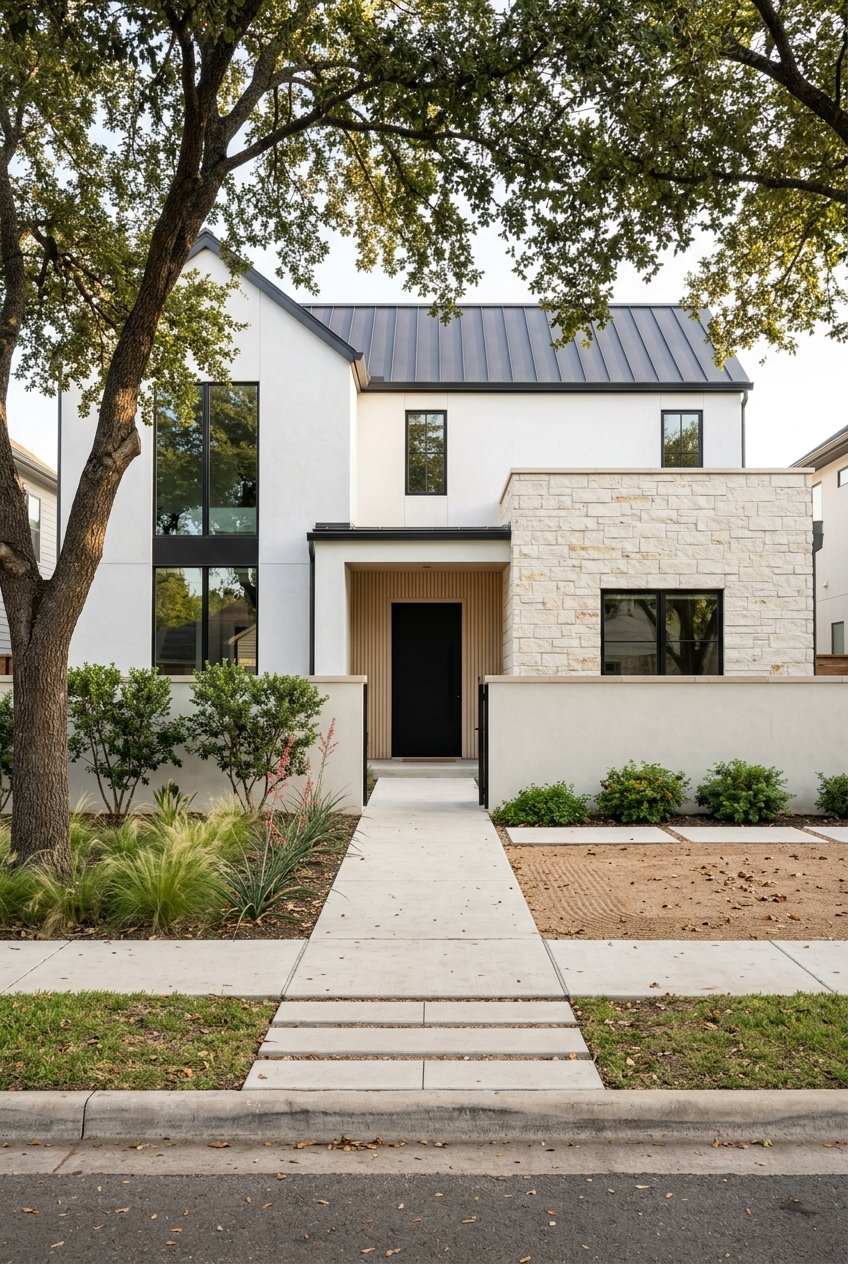
If you want a neighborhood with architectural variety, Old West Austin stands out. Preservation records describe a largely intact historic character with styles ranging from mid-19th-century Greek Revival to mid-20th-century International Style.
Most of the housing stock is still made up of wood-frame single-family homes and related outbuildings. You will also find some duplexes, apartments, and student housing in the broader area, though the historic district remains more heavily defined by single-family residences and mature landscaping.
One of the biggest draws here is that the homes do not all look the same. Bungalows, historic residences, and architecturally layered streetscapes create a more textured feel than you will find in many newer parts of Austin.
That said, Old West Austin is not frozen in time. The neighborhood plan supports compatible infill such as garage apartments and second units, while encouraging new additions and buildings to respect the existing scale and character. For buyers, that often means you get a blend of old-Austin charm and carefully considered updates rather than large-scale redevelopment.
Living in Old West Austin often means choosing location and character over brand-new construction. Many homes are older, lot sizes can be limited, and the market is not centered around abundant new-build inventory.
For the right buyer, that is exactly the point. If you value mature trees, front porches, historic texture, and a close-in address, the tradeoff can feel well worth it.
Old West Austin offers one of the more walkable lifestyles in central Austin. Redfin currently rates it at 83 for Walk Score and 85 for Bike Score, with a Transit Score of 49.
In real life, that means many daily destinations are close at hand. The neighborhood plan identifies Lamar, 5th Street, 6th Street, and West Lynn as key commercial corridors, and residents often walk to nearby businesses such as Nau’s Drugstore.
One thing that gives Old West Austin its personality is the scale of its commercial life. Planning.org describes the area’s compact business center as mostly homegrown, with national chain stores largely absent apart from the flagship Whole Foods store.
If you prefer neighborhoods that feel locally rooted, this is a meaningful advantage. You get convenience without the feeling of being surrounded by generic retail.
Planning.org also notes that shops, restaurants, schools, and community centers act as pedestrian destinations. Large shade trees and front porches add to that rhythm, making it easier for the neighborhood to feel social and lived-in rather than rushed.
That may sound like a small detail, but it changes how a place feels day to day. In Old West Austin, walking is often part of the lifestyle, not just a backup option.
Pease District Park is a major part of life in and around Old West Austin. The city describes Kingsbury Commons as part of an 84-acre public green space, with an urban park experience that is especially easy to reach on foot, by bike, or by public transit.
That kind of park access adds real value to the neighborhood. It gives you room to reset, exercise, meet friends, or just enjoy being outside without needing to drive across town.
Another well-known local landmark is Treaty Oak on Baylor between 5th and 6th Streets. Together, these spaces help Old West Austin feel like more than a residential address. It feels connected to some of central Austin’s most recognizable outdoor and historic places.
Old West Austin tends to work best for buyers who want central-city convenience with a residential feel. The city’s neighborhood plan points to a mix of long-term residents, young newcomers, business owners, UT graduate students, and families, along with a stated goal of maintaining diversity in residents, incomes, and housing types.
From a lifestyle standpoint, this is often a fit for people who want to be close to the core of Austin while still enjoying tree-lined streets, historic homes, and neighborhood-oriented businesses. It can be especially appealing if you care about walkability, design character, and long-term location value.
Old West Austin is a premium submarket. Redfin’s March 2026 data shows a median sale price of $1.5 million, compared with $530,000 for Austin overall.
That pricing gap tells you a lot. Buyers here are generally paying for location, walkability, historic character, and limited supply in a high-demand central neighborhood.
Redfin also classifies the area as somewhat competitive. In practical terms, that means you should approach your search with clear priorities and a realistic understanding of what matters most to you, whether that is architecture, condition, lot, or proximity to specific streets and amenities.
So what is it actually like to live in Old West Austin? In many ways, it feels layered, established, and distinctly central Austin. You are in a neighborhood where preservation matters, where older homes still shape the streetscape, and where local businesses and parks are part of daily life.
It is also a place with clear tradeoffs. You are often paying a premium for character and location, and you may need to be flexible about lot size, home age, or the amount of turnkey inventory available.
For many buyers, though, those tradeoffs are exactly what create the appeal. Old West Austin offers a blend that is hard to replicate: historic texture, walkable convenience, and a residential atmosphere just minutes from the city’s core.
If you are considering a move to Old West Austin and want help evaluating which blocks, home styles, or opportunities best fit your goals, Darsh Parikh can help you navigate the neighborhood with a strategic, design-aware approach.
Stay up to date on the latest real estate trends.
From Rooftop Patios to Sculpture Trails Around Rollingwood.
Beyond the broad appeal of a Westlake address, maximizing your home's sale depends on attracting the right buyer.
Explore the appeal of Tarrytown and what to consider before buying a home in one of Austin's best neighborhoods.
A Guide to Selling Your Multimillion-Dollar Austin Home.
Exploring Austin's majestic Barton Hills community, among the city's most sought-after residential destinations.
Work with a top real estate expert in Austin. Buying or selling a home, they can help you. Contact them now to start your home-searching journey!